


Key points
- Dallas sits on expansive clay that swells when wet and shrinks when dry, so foundations deserve the closest look.
- Check the air conditioning, attic insulation, windows and roof with summer in mind.
- Insurance cost is driven by the roof, the address, claims history and your deductible, so get a quote during the option period.
- A structural engineer's report is the standard next step when an inspector notes foundation movement.
Are Dallas homes built differently because of the weather?
Yes, in a few ways. Most Dallas houses sit on a concrete slab or a pier-and-beam foundation, not a basement, because the clay soil moves. Brick exteriors are common, central air conditioning is standard, and roofs are built and insured with hail and wind in mind.
Older neighborhoods such as Lakewood, Kessler Park and parts of North Oak Cliff have many pier-and-beam homes with crawl spaces. Most homes built in later decades sit on slabs, and newer ones often on post-tensioned slabs. Each has its own things to check.
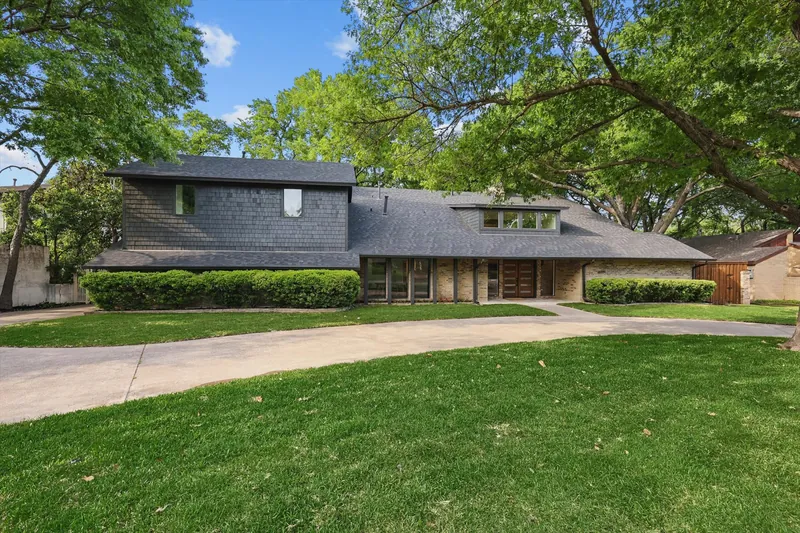
Lots matter too. Many close-in streets have rear alleys with garage access from behind, and mature live oaks, elms and pecans shade older blocks. Shade helps in summer, but big trees near the house also affect the soil under the foundation and the roof, so they belong on the inspection list along with the house itself.
What do newcomers need to know about Dallas foundations?
Dallas is built on expansive clay soil that swells when it gets wet and shrinks during drought. That seasonal movement is why foundation repair is a normal part of owning a house here, and why it should not scare you off a home by itself. Many owners keep the soil around the slab evenly moist during long dry spells, often with a soaker hose or the sprinkler system, to limit how much it shrinks.
What matters is the evidence and the paperwork:
- Signs of movement: stair-step cracks in brick, doors that stick or will not latch, cracks over doors and windows, sloping floors.
- Past repairs: ask for the repair contract, the engineer's report and whether the warranty transfers to you.
- Drainage: gutters, downspouts and soil that slopes away from the house.
- Trees: large trees close to the slab can draw moisture from the soil.
- Pier-and-beam homes: the crawl space, the condition of the beams and shims, and ventilation.
If the inspector notes movement, hire an independent structural engineer during the option period. An engineer's report tells you whether it needs repair and gives you something firm to negotiate with.
What should I look for in a house because of Texas summers?
Look first at the cooling system and the attic, because they decide both comfort and the electric bill. Dallas summers are long, and the air conditioning runs for months.
- Age, size and service records of the air conditioning units. The age is usually on the unit's label.
- Attic insulation depth and whether there is a radiant barrier.
- Windows: west-facing glass, single-pane windows and seals.
- Roof age and material, since heat wears roofs faster.
- Shade trees, a covered patio and the sprinkler system.
- Twelve months of electric bills, if the seller will share them.
Dallas has a competitive electricity market: Oncor delivers the power, and you choose a retail electric provider. The state's Power to Choose site lists plans.
How much does home insurance cost in Dallas?
It varies too much by house to give one number, so get a real quote for the exact address before your option period ends. Insurers price Dallas homes mainly on these drivers:
- Roof age, material and condition, because hail is the most common claim here.
- The deductible, including whether wind and hail carry a separate percentage deductible.
- The home's age, rebuild cost, plumbing and wiring.
- Prior claims on the house and on you.
- Distance to a fire station and hydrant, and the flood zone.
Standard policies do not cover flood. Check the address on FEMA's flood maps and ask your agent about flood coverage even outside a mapped zone. Dave Perry-Miller's OnePoint includes insurance if you want a quote through one connected process. More on costs is on the costs and financing page.
What about hail, roofs and spring storms?
Expect the roof to be the part of a Dallas house most affected by weather. Spring storms bring hail and high winds, and a roof that has taken hail can look fine from the street while the insurer sees damage.
- Ask the seller for the roof's age, any replacement invoice and any insurance claims on the house.
- Have the inspector, or a roofer, check for hail damage and remaining life.
- Ask your insurance agent whether the roof's age or material changes the coverage or the deductible.
- Look at gutters and downspouts, since heavy rain tests drainage around the foundation.
Impact-resistant shingles and metal roofs are common choices when a roof is replaced. Some insurers price them differently, so ask before you assume a discount.
What should I ask the seller before I buy?
Ask these in writing during the option period, in addition to reading the seller's disclosure notice:
- Has the foundation ever been repaired? Is there an engineer's report and a transferable warranty?
- How old are the roof, the air conditioning units and the water heater?
- Have there been insurance claims for hail, water or foundation?
- Has water ever entered the house or the garage during heavy rain?
- What are the average monthly electric bills in summer?
- Is there a sprinkler system, and does it have a backflow device and a rain sensor?
Honest answers here, matched against the inspection, tell you more about how a house handles Texas weather than any listing description.
What should the inspection cover in a Dallas house?
Ask your inspector to give these extra attention, and book specialists when the report points to a problem:
- Foundation: a level reading and notes on cracks, with an engineer if needed.
- Roof: hail damage, age and remaining life.
- Air conditioning: a heating and cooling technician if the units are older.
- Plumbing: a sewer camera on older homes with cast iron or clay lines.
- Drainage and grading around the house.
I walk every inspection report with my buyers and help decide what to ask the seller to repair, credit or leave. See buying a home for how the option period works.
Questions people ask
Should I avoid a house that had foundation repair?
Not necessarily. A repair done with an engineer's plan and a transferable warranty can be a plus, since the work is already done. Ask for the paperwork and have your own inspector look at it.
Is pier and beam or slab better in Dallas?
Neither is better in general. Pier-and-beam homes can be leveled by adjusting from the crawl space, and slabs are common and solid when drainage is right. Judge the specific house by its inspection.
When should I get an insurance quote?
During the option period, before you lose the right to walk away. Roof condition and claims history can change a quote a lot, so get it on the exact address.
Do I need flood insurance in Dallas?
A lender requires it if the home sits in a FEMA high-risk flood zone. Outside those zones it is optional but worth a quote, because standard home policies exclude flood.

Andy Scott is a Dallas Realtor and founding member of the GPS Group at Dave Perry-Miller Real Estate. He grew up in Dallas in a real estate family, has been licensed since 2005, and has helped buyers and sellers for more than 20 years. About Andy · Relocating to Dallas